AI pressure is peaking:
how execs are responding
AI has entered a new era as reality hits business leaders.
Presented by:

the future is now
the future is now
the future is now
the future is now
the future is now
the future is now
the future is now
the future is now
Axios' Fall 2025 Future of AI & Leadership Survey
685 business leaders reveal how U.S. companies are approaching the mounting pressure to adopt AI.
the pressure is on to adopt ai,
but it’s not living up to the hype — yet
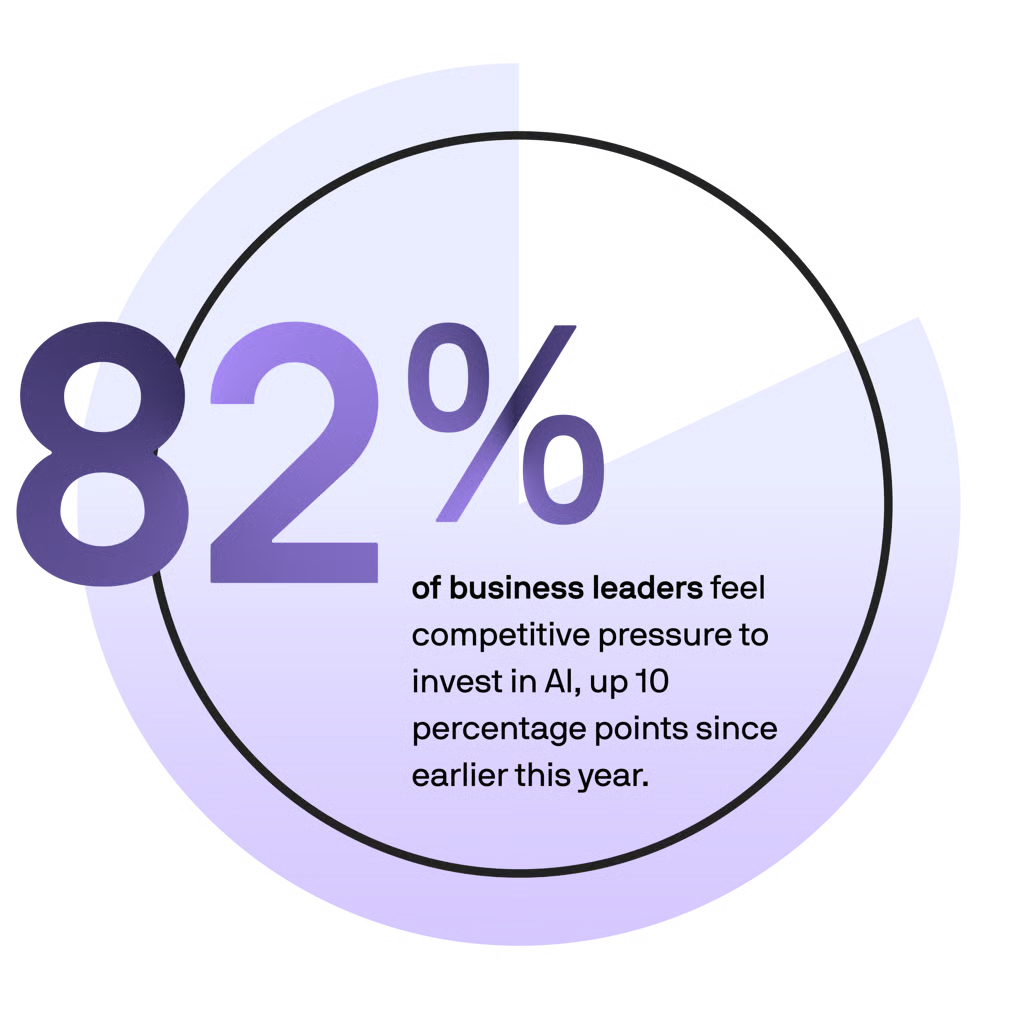
The pressure to adopt AI is mounting. 43% now report they feel significant competitive pressure, deeming AI a “board-level priority,” compared with 36% in the spring.
Another 39% say they do feel pressure but are taking a measured approach. Around 2 in 10 (21%) say they don’t feel pressure now but anticipate it, and only 5% say AI is not a competitive factor.
In the hot seat: Across industries, the majority of execs say they feel pressure to invest in AI, especially those in:
Professional services (88%).
Media and entertainment (85%).
Corporate and finance (83%).
Leaders of mid-market and large organizations are somewhat more likely to say they feel that pressure: 44% report significant pressure to invest, compared with 35% of small business leaders.
The intrigue: Although 93% of executives consider competitive advantage at least a minor factor when measuring the value of AI, their No. 1 consideration is productivity gains.
8 in 10 say productivity gains are a major factor when measuring AI’s value — far outweighing cost savings, revenue growth or faster decision-making. But it’s worth noting that for at least half of executives, all of the above were considered major factors.
What to watch: Even as most leaders turn to AI to boost productivity, there are still hurdles ahead.
For example, AI “workslop” isn’t just annoying; it also has the potential to hinder productivity.
What’s more, a recent study found that 95% of corporate AI initiatives yield zero return, despite investing billions in generative AI.
Most companies use AI agents,
but some keep them on a tighter leash
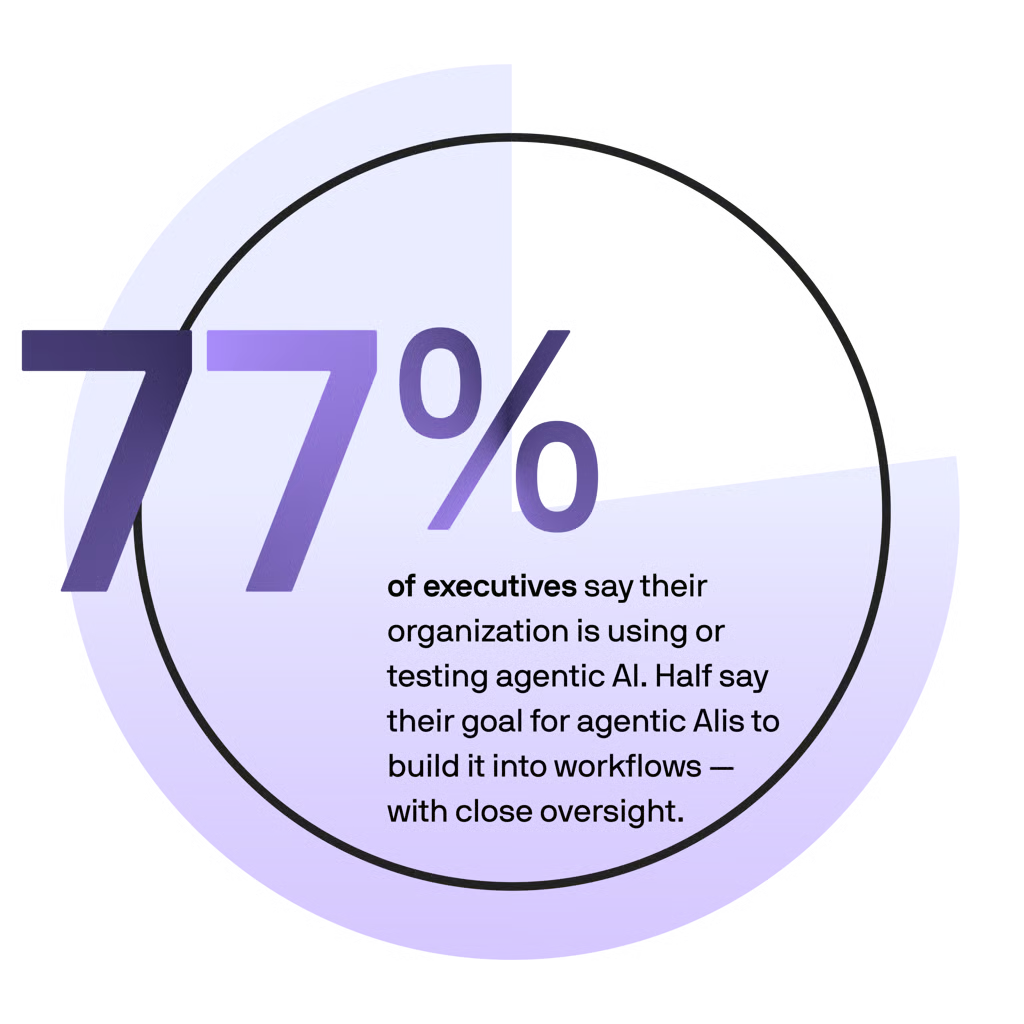
Of the executives who say their company is using or testing AI, only 11% say their organization’s goal for the tech is to make it central to growth, decisions and strategy.
Where it stands: Among those using agentic AI…
36% use it widely across the business.
37% use it in limited areas.
27% are testing it but not formally using it.
Leaders of companies of all sizes report that their organizations are using agentic AI, but it’s more common among those leading mid-market or large companies (90%) vs. small businesses (72%).
Flashback: In the spring, half of mid-market and large enterprise leaders said their companies were working with agentic AI compared with 36% of smaller organizations.
In other words, agentic AI adoption jumped sharply from spring to fall in 2025.
The catch: Although most organizations are using or testing agentic AI, most executives cite concerns about cyber security risks.
The vast majority of execs whose companies are using or testing agentic AI (86%) are very or somewhat
concerned about AI agents introducing new cyber security risks.
Private data leaks (59%) and AI evolving faster than security defenses (56%) are most likely to be cited as top AI agent-related cyber security concerns.
Of note: Those who feel the greatest pressure to invest in AI feel even more uneasy: 56% are very concerned about cyber security risks, compared with 35% of those who are taking a measured approach.
What to watch: These leaders’ concerns aren’t unfounded. AI agents are increasingly being treated like employees with access to sensitive systems and data — but without the same level of oversight and identity controls.

Leaders are divided on how to balance
the promise of AI with the reality of rising costs
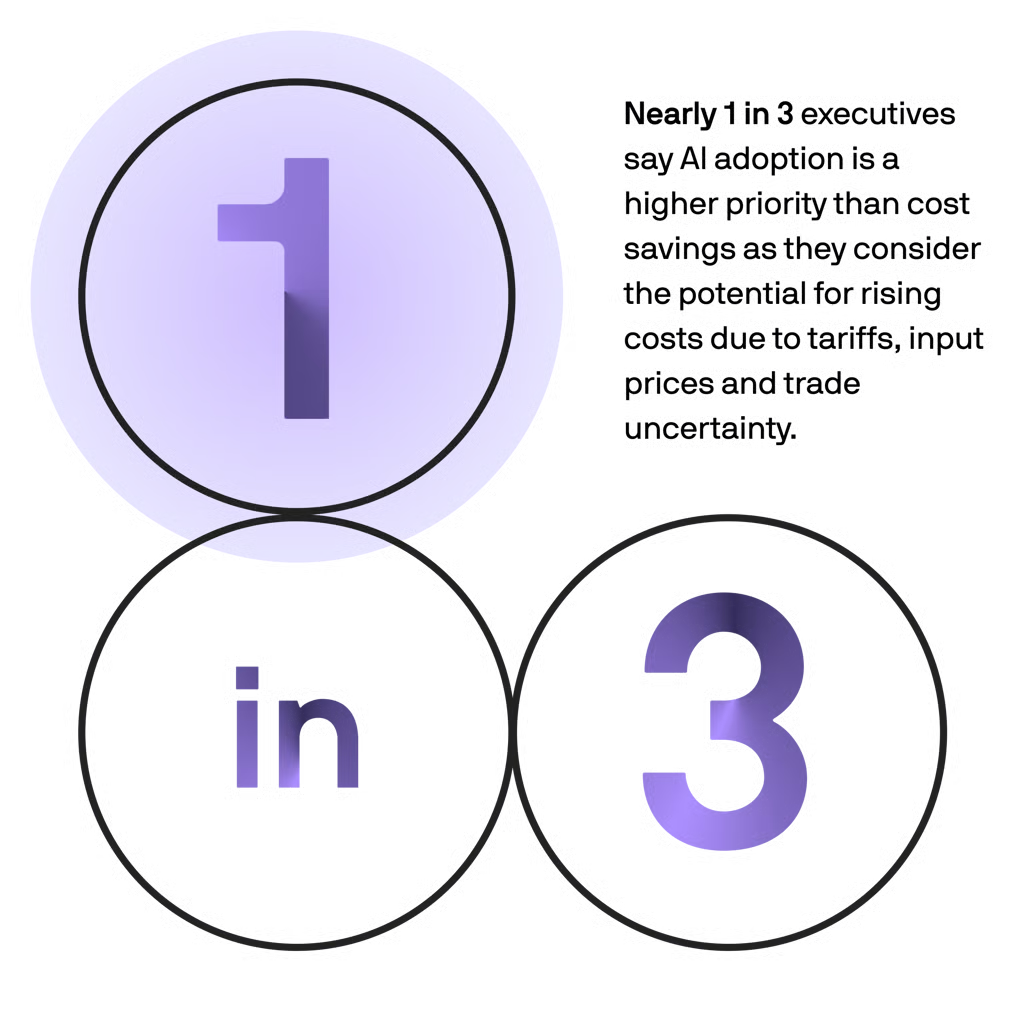
Executives face a tricky balancing act: invest in AI to drive productivity and secure U.S. competitiveness — while managing costs in an uncertain economic environment.
When asked whether AI adoption or cost savings are a priority…
29% of executives say they're prioritizing AI adoption.
25% are prioritizing cost savings.
27% are prioritizing both equally.
20% don't anticipate AI adoption will increase their costs.
For the record: Productivity gains are a big priority, but another reason the majority of business leaders want to invest in AI goes beyond boosting their own bottom lines.
60% say that U.S. global leadership in AI is a somewhat or very motivating factor in their organization’s innovation and investments.
Business leaders who say they feel significant pressure to invest in AI are also more likely to report U.S. global leadership as a motivator: 54% say it is very motivating, compared with just 15% of those who say they are taking a more measured approach.
What to watch: Right now, many executives are juggling AI’s promise and the drive to secure U.S. leadership with ongoing economic uncertainties. How companies navigate this tension will shape which firms emerge as AI leaders.
Turning the rush into real results
Executives are balancing the heat to invest in AI with cyber security risks and economic concerns. Many see the technology as key to productivity and U.S. competitiveness, but the true test ahead will be yielding real results.
Who we heard from: This report was powered by Axios Intelligence.
Around half of the business leaders surveyed are presidents or CEOs.
About 31% are based in the South and 27% in the Midwest. Fewer are based in the Northeast (19%), West (17%) or in U.S. territories (5%).
Catch up quick: Want more insights into America’s boardrooms? Earlier this year, we identified 3 trends in AI adoption.



1 big thing:
Executives are under pressure to invest in AI now or risk falling behind. The true test will be turning the rush into real results.